
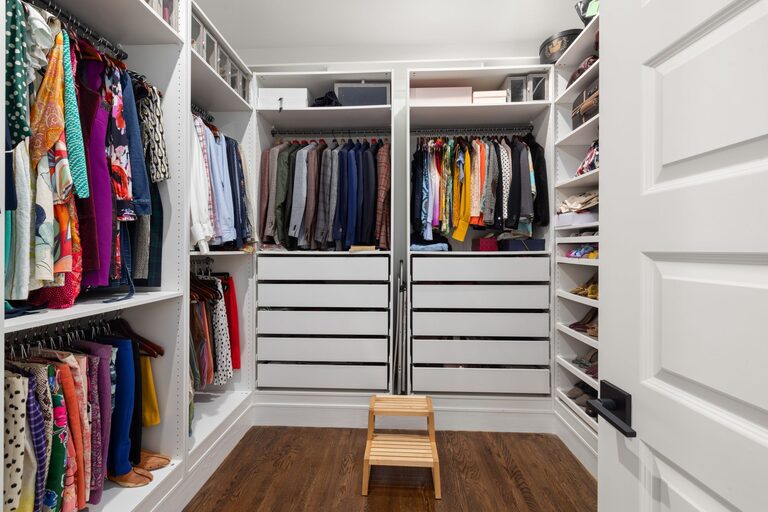
A tidy closet can make everyday routines easier, save time, and help you get more use from the items you already own. The key is not simply organizing everything once. A closet stays organized when it has a clear system that is easy to maintain.
Whether you have a spacious walk-in closet or a small reach-in space, these practical tips can help you create an arrangement that works for your lifestyle.
Start With a Complete Reset
It is difficult to organize a closet while working around crowded shelves and overstuffed hangers. Begin by taking everything out, or work one section at a time if the space is large.
Place clothing, shoes, accessories, and other items in an open area where you can see them clearly. This gives you a better idea of how much you own and prevents items from being forgotten at the back of the closet.
As you empty the space, wipe down shelves, vacuum the floor, and clean corners where dust tends to collect. Starting with a clean closet makes the finished result feel fresher and gives you a clear foundation.
Sort Items Into Simple Categories
Sorting is easier when you use a few clear categories. Create separate groups for:
– Keep
– Donate or give away
– Repair or alter
– Recycle or discard
– Unsure
Try to make decisions based on how often you use an item and whether it fits your current needs. If you have not worn something in a long time, consider whether it still suits your style, size, or routine.
For items in the unsure group, place them in a labeled box or bag. Set a reminder to review them in a few months. If you do not reach for them during that time, they may be ready to leave your closet.
Avoid keeping items only because they were expensive or once fit a different lifestyle. Your closet should support your current life, not preserve every past version of it.
Group Similar Items Together
Once you have chosen what to keep, organize items by type. For example, place shirts together, followed by sweaters, pants, dresses, jackets, and special-occasion clothing.
You can also divide clothing by use:
– Workwear
– Casual clothing
– Exercise clothing
– Seasonal pieces
– Formal clothing
Choose the method that feels most natural. If you usually get dressed by outfit type, organize that way. If you prefer to choose by garment, group similar pieces together.
Within each category, arrange items by color or length if that helps you find them faster. A consistent order makes it easier to put things away correctly.
Use the Closet’s Vertical Space
Many closets have unused space above shelves or below hanging clothes. Make the most of these areas with practical storage solutions.
Consider using:
– Shelf dividers for folded clothing
– Stackable bins for accessories
– Hooks for belts, scarves, or bags
– Hanging organizers for shoes or small items
– Slim drawers for socks and undergarments
– A second hanging rod for shorter clothing
Storage tools should make items easier to see and reach. Avoid adding containers simply to fill empty space. Too many boxes can make a closet harder to use, especially when items are hidden from view.
Choose clear bins for items you want to identify quickly. For less frequently used belongings, opaque containers can work well, but add simple labels so you know what is inside.
Choose the Right Hangers
Matching hangers can make a closet look neater and help create more usable space. Slim, nonslip hangers are especially helpful in smaller closets.
Use sturdy hangers for coats, jackets, and heavier clothing. Padded hangers can protect delicate garments, while wooden hangers may work well for structured pieces.
Avoid placing too many items on a single hanger. Although this may save space temporarily, it can wrinkle clothing and make items harder to find. If a piece needs to be stored together with another item, use a hanger designed for layered clothing rather than forcing several garments onto one hook.
Fold Clothing in a Way That Saves Space
The best folding method depends on the type of clothing and the storage space available. Fold bulky sweaters and heavier items in stacks to help them keep their shape. For smaller pieces, use drawers or bins and place items upright when possible.
An upright arrangement allows you to see more of your clothing at once. It also reduces the need to dig through a tall stack and disturb everything underneath.
Do not pack drawers and shelves too tightly. Leave enough space to remove one item without pulling out several others. A little extra room makes daily maintenance much easier.
Keep Shoes and Accessories Under Control
Shoes and accessories can quickly make a closet look cluttered because they come in many shapes and sizes. Give each category a specific home.
Store frequently worn shoes where they are easy to reach. Use a shoe rack, cubbies, or a low shelf to keep pairs together. Place seasonal or special-occasion shoes in labeled boxes if they are not needed regularly.
For accessories, use small compartments, hooks, or trays. Keep similar items together, such as watches in one section and scarves in another. Bags can be stored upright on a shelf or hung from sturdy hooks.
If you have several bags, fill them with soft items such as scarves or towels when storing them. This helps them keep their shape without taking up much additional space.
Rotate Seasonal Items
Seasonal rotation can free up valuable space and make your everyday wardrobe easier to navigate. When warm or cold weather arrives, move less relevant clothing to another closet, under-bed storage, or labeled containers.
Before storing seasonal items, make sure they are clean and completely dry. Fold them carefully and avoid overfilling containers. Store heavier pieces near the bottom and delicate items where they will not be crushed.
Use labels such as “summer clothing” or “winter accessories” to make future changes faster. This is also a good time to remove items you did not wear during the previous season.
Create a Simple Put-Away Routine
A closet stays tidy when putting things away is quick and predictable. After changing clothes, decide immediately whether each item belongs in the laundry, back in the closet, or in a repair area.
Use a small basket for clothing that needs mending, cleaning, or special care. This prevents those pieces from ending up on the floor or mixed with ready-to-wear clothing.
At the end of each day, spend a few minutes returning items to their proper places. A short daily reset is easier than a major cleanup after clutter has built up.
Review the Closet Regularly
Even a well-organized closet can become crowded over time. Set aside a few minutes once a month to check for items that are out of place, no longer useful, or difficult to store.
You may also want to use a seasonal review to:
– Remove damaged items
– Donate clothing you no longer wear
– Reorganize changing needs
– Replace worn storage tools
– Return misplaced items to their categories
The goal is not perfection. A successful closet is one that supports your routine and can be reset without much effort.
Make Organization Easy to Maintain
The most effective closet system is one you can follow consistently. Keep frequently used items at eye level, place rarely used belongings higher or farther back, and avoid creating complicated categories.
Give every item a designated home. When something does not have a clear place, it is more likely to end up on a chair, floor, or nearby surface.
Leave a little open space on shelves and hanging rods. This makes it easier to return items and gives you room when you add or replace something.
With a clear layout, practical storage, and a few regular habits, your closet can stay tidy long after the initial cleanup. The result is a space that feels calmer, works more efficiently, and makes getting dressed simpler every day.
About the Author